
Don’t you love it when all 50 of your open roles are P1 emergencies?
“This junior marketing intern role is mission critical”
“My executive assistant hire must take priority….I’m not checking myself into my own flights, what am I? A CAVE MAN!?!”
If everything is a priority, then nothing is. And it’s costing your business money, time, and trust in TA.
I see this all the time during headcount planning:
50 live roles. 49 of them tagged as P1.
And five different execs all quacking:
“Why aren’t the two recruiters we didn't lay off last year working my roles like the P1s they are?”
Here’s how to fix it:
- Create a shared definition of priority.
- Use a simple decision tree everyone agrees on.
You can even build it straight into your role request form.
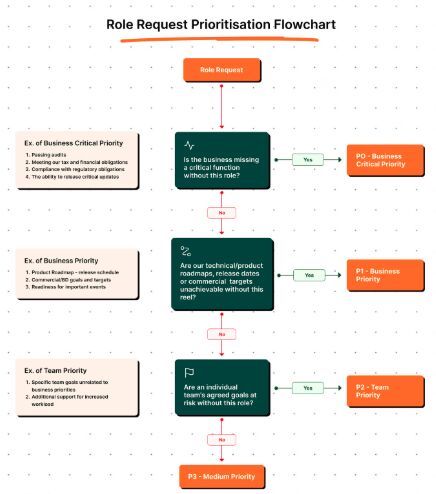
Here’s an example framework you can steal from me:
Priority 1 - Business Critical
Ask: Is the business missing a critical function without this role?
If yes - it’s P1.
Examples:
- Compliance or audit deadlines
- Meeting legal or regulatory obligations
- Keeping the product or platform functioning
Priority 2 - Commercial or Product Roadmap Dependency
Ask: Are our technical or product roadmaps, release dates, or commercial targets unachievable without this role?
If yes -it’s P2.
Examples:
- Launching a key product feature
- Delivering on a signed client commitment
- Achieving revenue milestones
Priority 3 - Team-Level Objectives
Ask: Are an individual team’s agreed goals at risk without this role?
If yes - it’s P3.
Examples:
- Increasing bandwidth or reducing burnout
- Team restructures or backfills
- Internal team goals (not business-critical)
Priority 4 - Everything Else
If none of the above?
It’s a nice-to-have.
Examples:
- Opportunistic or exploratory hires
- Roles without clear scope or timing
- Back-pocket reqs
How to implement it:
- Get your founders or execs to sign off on the framework.
- Add the questions into your role request form
- Assign priority based on those answers.
That way, your stakeholders aren't event asked the priority, they just have to use their discretion to answer the above questions and priority is assigned programatically, not gut feel. And leadership can always adjust any edge cases.
Now you’ve got a consistent decision tree recruiters can plan resources better and forecast time to hire better. Now your stakeholders know how priorities actually work.
Luke Update
This week i’m in New York attending the Avalanche Summit 2026. If you are new york based, come say Hi! Also, myself and the awesome Shaun Hervey from Arkham Talent will be hanging out in the Pig and Wistle in Midtown on Friday evening if you fancy a wee beverage.
Well... that's issue seventy nine! If you have any questions about it, or any feedback on this issue of The Data Driven Recruiter, grab me on LinkedIn for a chat.
I'll see you next week!